
Types of Dental Implants: Which One Is Right for You?
TL;DR
- Dental implants replace missing teeth with artificial roots placed in the jawbone.
- There are different types of dental implants based on placement and the number of teeth replaced.
- Endosteal implants are used for healthy jawbones, subperiosteal implants for low or weak jawbones, and zygomatic implants for severe upper jawbone loss.
- You may need a single implant, an implant bridge, or full-arch implants, depending on how many teeth are missing.
- Your bone health, medical history, and habits such as smoking play a big role in deciding suitability.
What Are Dental Implants?
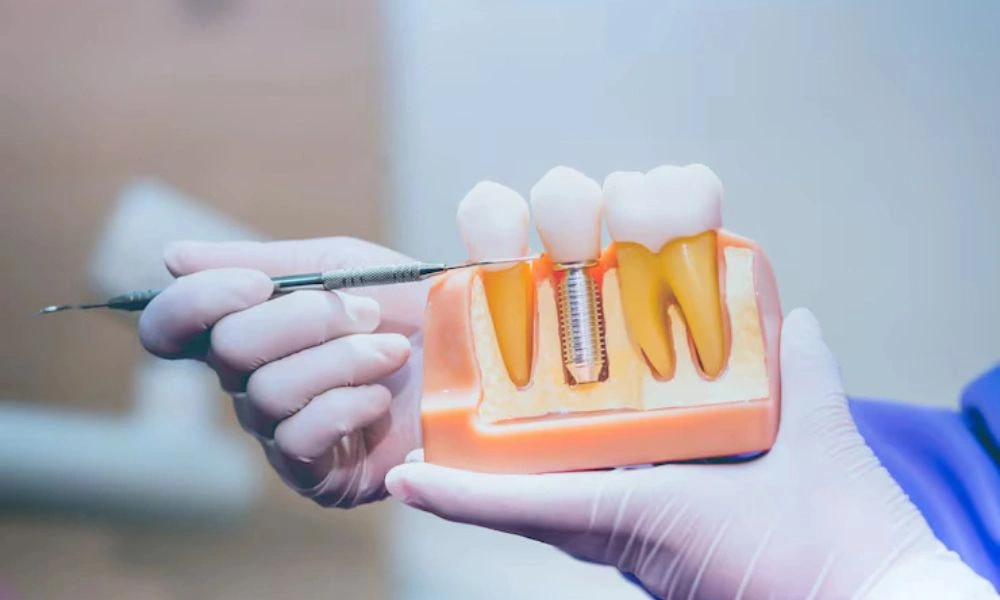
Dental implants are artificial tooth roots placed in the jawbone to replace missing teeth. They support crowns, bridges, or dentures so that replacement teeth feel secure and function much like natural ones. Unlike removable dentures that rest on the gums or traditional bridges that rely on neighboring teeth for support, implants integrate with the bone. As a result, they offer greater stability and even preserve the jaw structure.
There are different types of dental implants, and the choice is not the same for everyone. Options can vary according to how many teeth need to be replaced and where the implant is positioned in the jaw. The next sections look at these options so you can understand which approach may be most appropriate for you.
Types of Dental Implants Based on Placement
Implants are positioned in different parts of the jaw depending on bone quality, bone volume, and the clinical situation. Broadly, the main 3 types of dental implants based on placement are endosteal, subperiosteal, and zygomatic implants:
1. Endosteal implants
Placed directly into the jawbone. These are the most commonly used implants and are usually shaped like small screws or cylinders.
Benefits:
- High stability due to strong bone integration
- Suitable for replacing single or multiple teeth
- Long-term success rates are well documented
- Feels closest to natural teeth during chewing
2. Subperiosteal Implants
Anchored on top of the jawbone but under the gum tissue. A metal framework supports the artificial teeth, sitting just above the bone.
Benefits:
- Option for patients with low jawbone height or density
- Avoids bone grafting in many cases
- Suitable when patients cannot or do not want bone augmentation procedures
3. Zygomatic implants
Inserted in the cheekbone (zygoma) instead of the upper jaw. Recommended when there is severe bone loss in the upper jaw.
Benefits:
- Alternative to extensive bone grafting or sinus lift
- Allows rehabilitation in cases of advanced bone loss
- Provides strong anchorage due to dense cheekbone structure
Types of Dental Implants Based on the Number of Missing Teeth Replaced
The choice of implant treatment depends not only on where the implant is placed, but also on how many teeth need to be replaced. Implant solutions can replace a single tooth, several teeth in a row, or a full arch of missing teeth:
1. Single-tooth implant
Used when only one tooth is missing. A single implant post is placed in the jawbone and topped with an individual crown.
Benefits:
- Replaces a missing tooth without trimming neighboring teeth
- Helps maintain the jawbone at the missing tooth site
- Prevents neighboring teeth from drifting into the gap
2. Implant-Supported Bridge
Used when multiple teeth in a row are missing. Two or more implants support a bridge of multiple connected crowns.
Benefits:
- Replaces multiple missing teeth without individual implants for each gap
- Provides strong support for chewing
- More stable than traditional dental bridges
3. Full-arch (all-teeth) Implant Solutions
Used when all or most teeth in an arch are missing. A fixed full-arch bridge or denture is supported by multiple implants placed across the jaw.
Benefits:
- Restores a complete set of the upper or lower arch of teeth
- Reduces slipping, clicking, or discomfort associated with conventional dentures
- Helps maintain facial structure by preserving bone
Other Types of Dental Implants (Special Cases)
Some dental implant options are made for specific situations, such as limited jawbone, multiple missing teeth, or the need for faster treatment. These are less common but useful in certain cases:
1. Mini implants
These are smaller in diameter than standard implants. They are often used to stabilize dentures or in narrow jaw spaces.
Benefits:
- Minimally invasive procedure with shorter recovery time
- Suitable for patients with thin or narrow jawbones
- Can stabilize loose dentures without extensive surgery
2. Immediate-load (same-day) implants
These can be placed and fitted with a temporary crown on the same day as the implant surgery.
Benefits:
- Reduces overall treatment time
- Allows patients to leave the clinic with a functional tooth immediately
- Minimizes multiple surgical visits for eligible candidates
Factors That Decide the Right Type of Implant
Our experts at Dental Associates evaluate multiple factors to determine the most suitable implant option, and these same factors also influence the overall cost of treatment:
- Number of missing teeth: If you are missing only one tooth, a single-tooth implant is usually sufficient. For several adjacent missing teeth, an implant-supported bridge may be appropriate, while full-arch or All-on-4/6 solutions suit those missing most or all teeth in an arch.
- Location of missing teeth: Front teeth are more visible and require careful attention to aesthetics, including matching the shade, shape, and gum contour. Molars and back teeth need implants that can withstand higher chewing forces, so sturdier placement and sometimes multiple implants are required.
- Jawbone quality and quantity: Standard implants require sufficient bone density. If your jawbone has deteriorated due to bone loss, special implants such as zygomatic or mini implants may be recommended, sometimes combined with bone grafting.
- Gum and overall oral health: Healthy gums and surrounding teeth are essential for long-term implant success. Periodontal disease or chronic infections can limit which dental implant types are suitable for you.
- General health conditions: Systemic conditions like diabetes, osteoporosis, or autoimmune disorders can affect healing and implant integration. Your dentist will assess whether any medical conditions require adjustments in the treatment plan.
- Lifestyle factors: Smoking, poor oral hygiene, or habits like teeth grinding can influence implant longevity. Some implant types are better suited for patients with specific lifestyle concerns.
- Budget and insurance coverage: Implant procedures vary in cost depending on type, number of teeth replaced, and any preparatory procedures (like bone grafts). Some options may be more affordable or better covered by insurance.
- Treatment timeline and comfort preferences: Immediate-load (same-day) implants allow you to leave with a temporary tooth on the same day, while standard implants require a longer healing period.
The best type of dental implants for your specific case can only be determined after a thorough dental examination and consultation.
The Bottom Line
The right option depends on how many teeth are missing, where they are located, the quality of your jawbone, and what you personally feel comfortable with. Once you understand the different types of dental implants, it becomes easier to have an informed conversation with your dentist about what will work best for you.
If you feel ready to take the next step, the team at Dental Associates is happy to talk you through your choices and answer your questions. We are a friendly community dentist you can rely on, with four convenient locations across Minnesota.
You can visit our community dental clinic in Maple Grove, Savage, and St Paul. We also provide gentle, dedicated care for young patients at Dental Associates of Savage Children’s.
Schedule a consultation, and let us help you find the implant solution that suits you best:
Maple Grove: +17633630063